
Plan A
Single session
148,500 YEN
Private care (not covered by insurance)
- 1 ketamine session
- 1 preparation session
- 1 integration session
- 1 follow-up integration ~2 weeks later
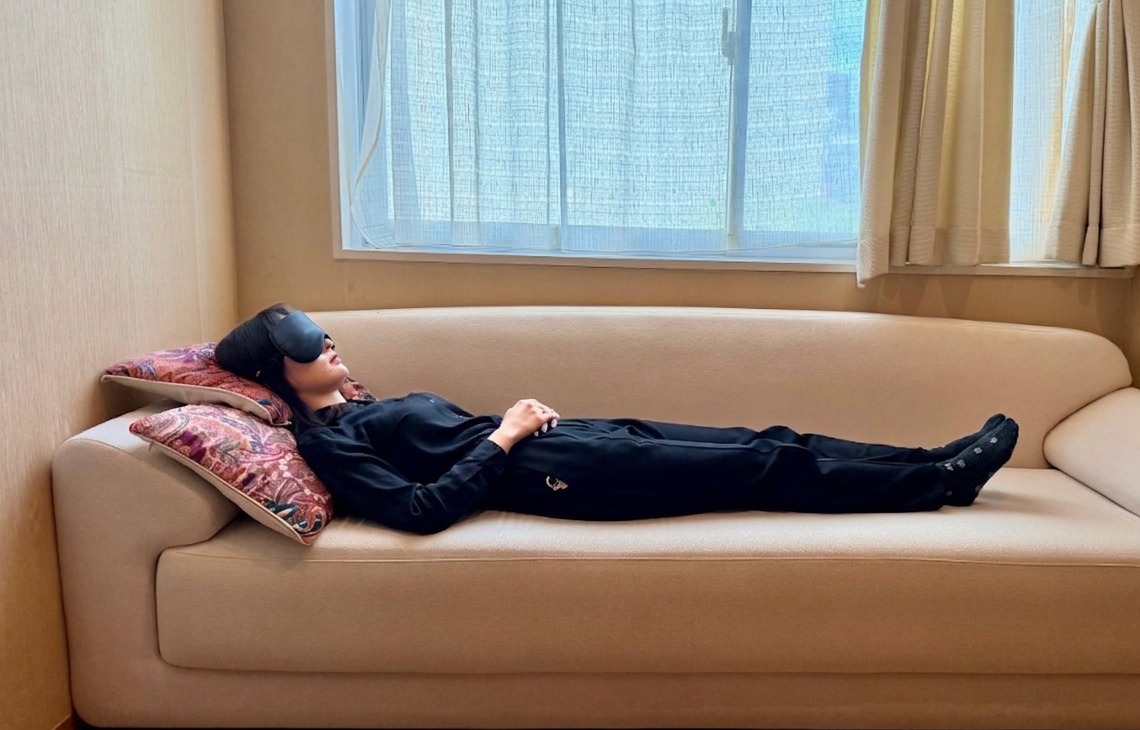
An approach in psychiatric care that pairs ketamine, which can temporarily alter consciousness, with psychological support from trained clinicians. It is not medication alone: preparation, the session, and integration form one continuous process.
This treatment is not a substitute for standard care. In Japan it is an off-label use, offered as private care not covered by insurance. We explain the risks at the first visit.
You change medications. You give it time. Still, no clear way out. That does not mean you have not tried hard enough.
Ketamine-assisted psychotherapy (KAP) is one further option for people who have not found sufficient relief so far. We can begin by carefully asking whether it may be a fit for you.
KAP is more than the medication itself. From psychiatric assessment through preparation, the session, integration, and follow-up, physicians and mental health professionals work together throughout. During sessions we monitor continuously, keeping safety first.

Norihide Ensako
HIKARI CLINIC Director / Psychiatrist
Another option for people who have not found enough relief so far. We stay beside you through the whole arc of prepare, experience, and integrate into daily life.
Ketamine-assisted psychotherapy proceeds in five steps, with physicians and mental health professionals working together.
A psychiatrist reviews history, current symptoms, and co-occurring conditions to judge whether KAP is appropriate.
In a session with a mental health professional, you build readiness and share the aims of psychologically supported care before the dosing day.
Under continuous clinical monitoring and careful physician-led dosing, the session takes place.
Always held after the ketamine session. You reflect with a mental health professional and begin weaving the experience into daily life.
About two weeks later, we review changes in symptoms and daily life and consider ongoing plans.
Clinical studies have reported antidepressant effects, but how change appears varies from person to person, and not everyone experiences the same outcome. This treatment is not a substitute for standard care. Suitability is decided individually at the first-visit assessment.
We may not be able to offer treatment for safety reasons, for example a history of schizophrenia, uncontrolled hypertension or heart disease, or pregnancy / breastfeeding.
Initial consultation & assessment
16,500 YENPrivate care (not covered by insurance)
Single session
148,500 YEN
Private care (not covered by insurance)
3-session course
297,000 YEN
Private care (not covered by insurance)
6-session course
528,000 YEN
Private care (not covered by insurance)
The ketamine-assisted psychotherapy we provide is an off-label use not approved for this indication in Japan. Before treatment begins, we ask you to understand the risks, side effects, and that this is private care, then sign a consent form.
If something is on your mind, start gently. Free online consultations are available.
At HIKARI CLINIC, we offer ketamine-assisted psychotherapy (KAP) as private care: ketamine paired with psychological support through preparation and integration, for people who have not found enough relief with conventional antidepressants.
For depression that has not responded well to existing treatments, clinical studies have reported a relatively rapid antidepressant effect of ketamine.
Drawing on established clinical protocols, we provide treatment with psychiatric assessment and medical monitoring, with safety as a first priority.